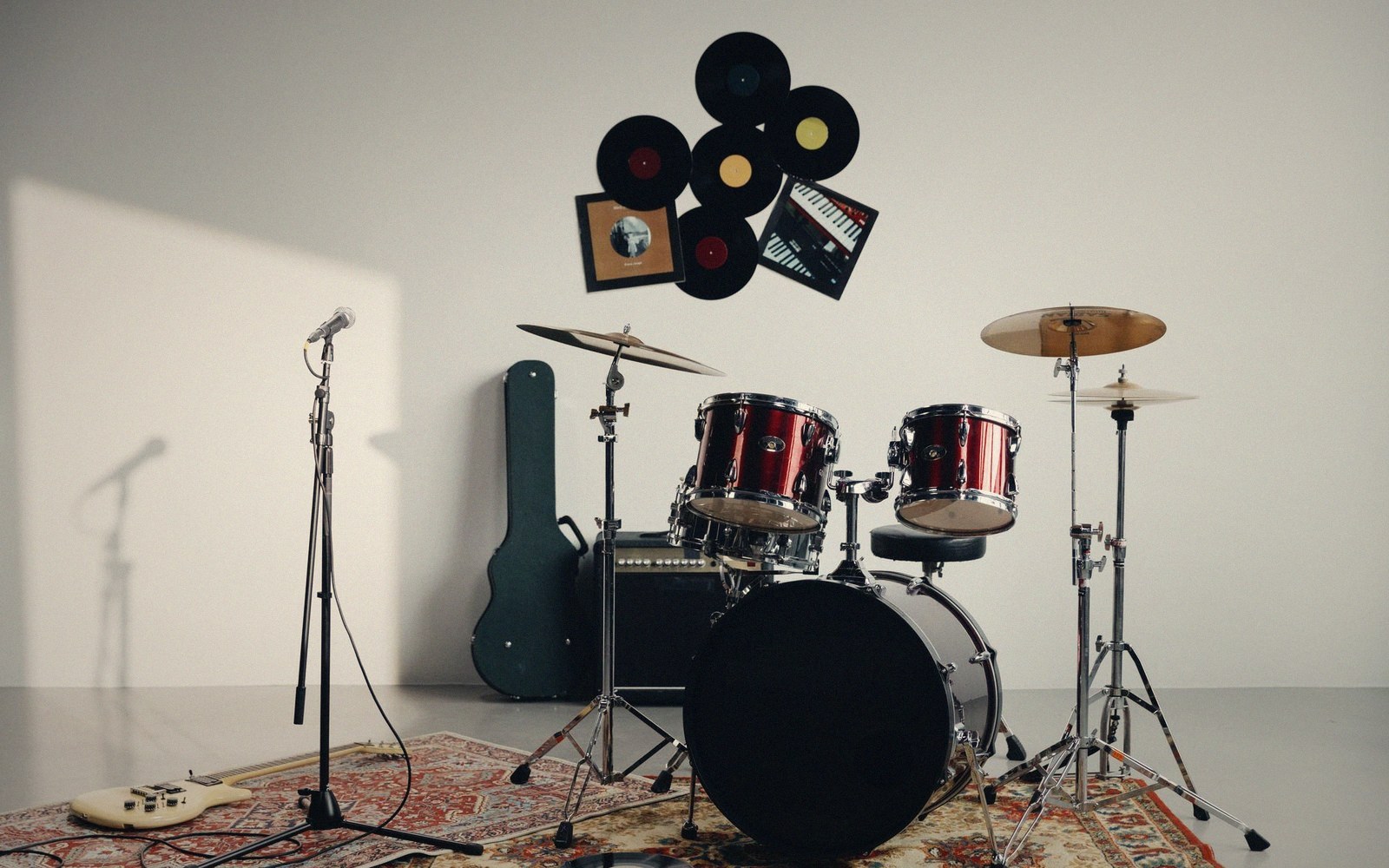
Move a snare drum twelve feet and you change the record.
Every surface in a recording space reflects, absorbs, or diffuses sound before it reaches a microphone. The ratio of direct signal to reflected energy, and the time those reflections take to arrive, determines what engineers call room tone — the acoustic character a space imprints on everything recorded inside it. Two identical kits, the same microphones, the same console, different rooms: two fundamentally different sounds. The room is not neutral. It is always playing.
This is why certain live rooms acquired reputations as specific as any instrument. The stone room at Townhouse Studio 2 in London became famous not despite its hard parallel surfaces but because of them.
Those walls produced long, dense reflections — reflections that, when compressed hard and then gated so their tails were cut short, gave early-eighties pop drumming its characteristic explosive crack. The room wasn't incidental to that sound; it was the mechanism. Hugh Padgham's work with Peter Gabriel and Phil Collins there drew directly on what those stone surfaces did to a snare hit.
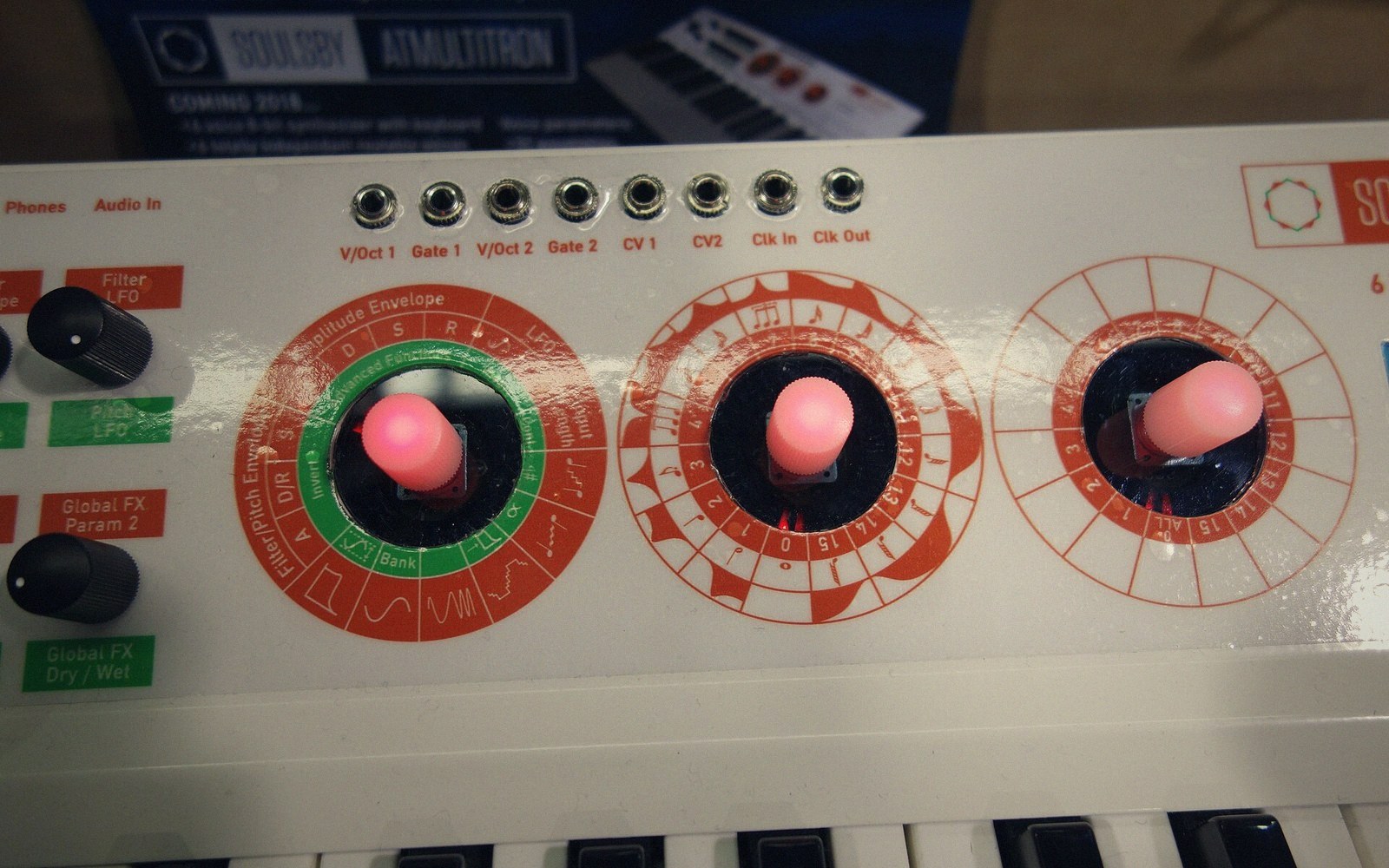
Photo: Soulsby Atmultitron - 6 Voice 8-bit Synthesizer - panel middle - 2017 NAMM Show (2017-01-21 17.39.56 by Pete Brown @ Flickr 32432577146) · Wikimedia Commons
The opposite choice is equally deliberate. An acoustically dry room — one lined with absorption, angled baffles, or irregular surfaces that scatter reflections — gives a close, controlled sound with little bleed between instruments. Studio designers use the term "dead" without apology. A dead room pushes the engineer toward artificial reverb added in the mix; a live room prints ambience to tape in real time and gives the producer more to live with later, for better or worse.
Geometry, material, surface
Room size governs which frequencies build up and which decay. Small rooms generate standing waves — points where bass frequencies reinforce or cancel depending on where you stand, which is why a bassist moving a meter can suddenly disappear from a monitor mix. Large rooms spread those modes out and thin them.
The ideal recording space for a drum kit is rarely the same one you'd want for an acoustic guitar. Many studios solve this by building several rooms at different scales, or by installing variable geometry — large curtains on tracks, moveable panels — so the same space can be tuned.
Material matters as much as geometry. Concrete and stone are reflective; they lengthen decay and add brightness. Timber is warmer and more absorbent in the mid-range. Conny Plank's studio outside Cologne, where he worked with Kraftwerk, Neu! and others, used a more controlled, drier acoustic aesthetic than the stone-room approach being developed in London at roughly the same time — a choice that shaped the mechanical precision of the records made there as directly as any synthesiser.
The height of a room matters too. A high ceiling pushes early reflections further back in time, giving the ear more space before the first bounce returns. Studios that record orchestras need that gap — it is part of the reason classical recording halls were built tall and wide long before anyone had decided what a live room was supposed to be.
The microphone placement decision
Where a microphone sits in a room determines which part of that acoustic field it captures. Close-micing isolates a source and minimises room. A distant ambient microphone — a room mic, in studio shorthand — captures the whole acoustic envelope, including the decay and the reflections from every surface.
Many studios solve this by building several rooms at different scales, or by installing variable geometry — large curtains on tracks, moveable panels — so the same space can be tuned.
Engineers blend both, and the ratio of close to room is one of the primary creative decisions in drum recording. Moving a room mic two feet can shift the apparent size of the space by what sounds like a factor of ten.
None of this is passive. The producer who chooses a room is choosing a collaborator that cannot be overridden in post, only worked around. Tape captures what the microphone hears, and the microphone hears the room first.
Continue in The Rooms
Same section, next entry
Related elsewhere in the magazine
Named in this entry
Every name above is real and appears here for documented work only. Where an origin story is contested this magazine says so rather than choosing the tidy version.