The Machines / Entry 1.4
The DX7
Yamaha's FM synthesiser sold 200,000 units and one preset defined a decade
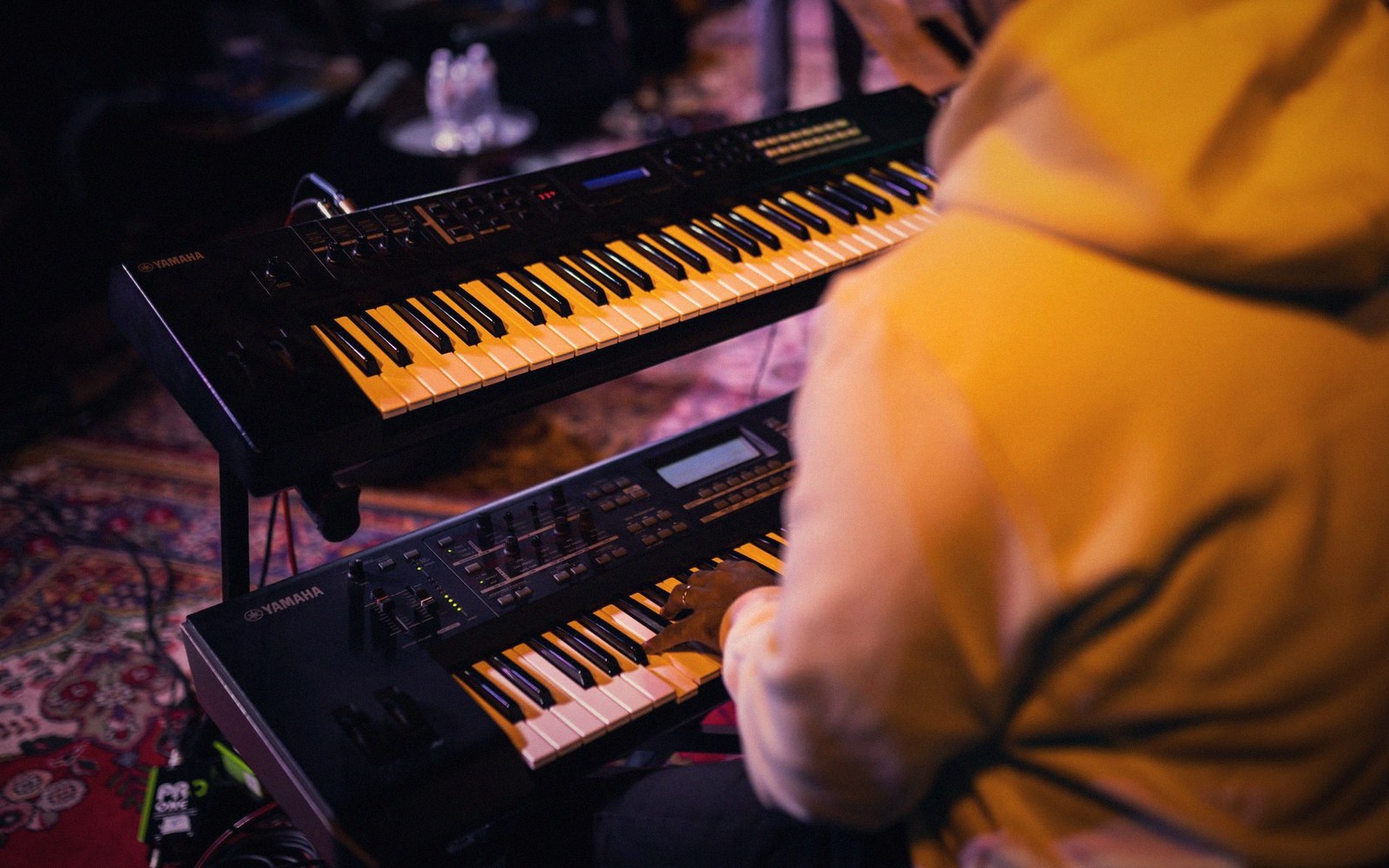
The Sound Everyone Borrowed
Yamaha released the DX7 in 1983 at a price point — around $2,000 — that undercut the Prophet-5 by a factor of three. It sold in extraordinary numbers; estimates consistently place the total above 200,000 units, making it one of the best-selling synthesisers in history. Almost every major pop record of the mid-to-late 1980s has at least one DX7 part on it. A remarkable proportion of them have exactly the same one: Preset 11, ROM-A, labelled "E.PIANO 1."
That electric piano sound — glassy, slightly bell-like, with a fast transient attack and a gentle shimmer in the decay — is so common across the decade that it functions less as a stylistic choice than as the default texture of a certain kind of studio track.
Phil Collins, Whitney Houston, Toto, Brian Eno, Sade: the preset crossed genres without friction and appeared on recordings made on three continents. Its ubiquity had almost nothing to do with artistry and almost everything to do with the fact that the DX7 was genuinely difficult to program from scratch.
FM Synthesis and Why It Was Hard
The synthesis method at the heart of the DX7 was not Yamaha’s own invention. FM synthesis — frequency modulation synthesis — was developed by John Chowning at Stanford University in the late 1960s and early 1970s, where Chowning demonstrated that modulating one audio-rate oscillator (the “modulator”) with another (the “carrier”) produced sidebands: rich, complex spectra that could mimic acoustic instruments with a fraction of the computational overhead that additive synthesis required.
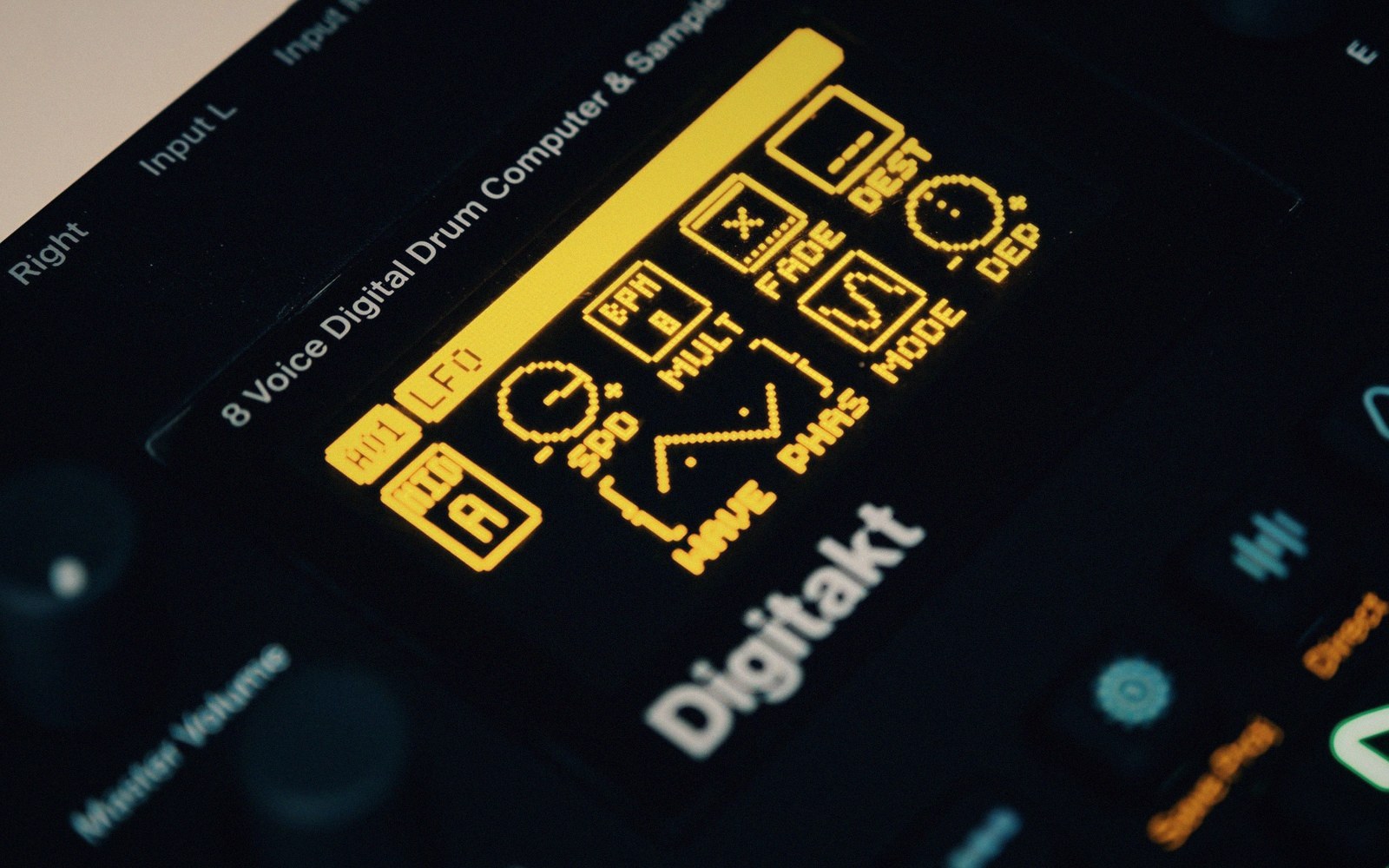
Photo: Egor Komarov / Pexels
Yamaha licensed the technology from Stanford in 1973, spent nearly a decade refining it for a commercial instrument, and launched the DX7 as the consumer end of a line that included the larger DX1 and DX5.
The DX7 built its voices from six operators — Yamaha's term for oscillator-plus-envelope units — arranged in one of 32 fixed algorithms that determined how the operators connected and modulated each other. Adjusting a sound meant navigating a membrane-button interface to reach 155 parameters spread across menus, then keying in numerical values.
There was no knob-per-function, and almost no immediate physical feedback between what you moved and what you heard. Programmers who had worked with voltage-controlled analogue synthesisers — where you could turn a cutoff knob and hear the filter sweep in real time — found the DX7's interface essentially foreign.
The consequence was predictable: most users played the factory presets. Yamaha shipped the instrument with 32 internal patches and a ROM cartridge holding another 32. Those 64 sounds covered electric piano, vibraphone, harpsichord, bass, brass, and a handful of atmospheric pads. Third-party cartridges multiplied the palette, and a cottage industry of FM programmers sold their work through magazines and mail order — but in commercial recording, the factory "E.PIANO 1" remained dominant well into the decade.
What It Actually Did to a Record
The DX7's polyphony was 16 voices, more than triple what the Prophet-5 offered, and its tuning was digitally stable — no drift between takes, no warm-up period. Engineers valued the consistency.
It also had a built-in MIDI implementation from launch, which made it immediately lockable to sequencers and to other instruments, a practical advantage that analogue machines retrofitted only gradually. On a multitrack session, a DX7 part could be sequenced, adjusted in tempo without re-recording, and doubled or layered without intonation problems.
Yamaha eventually discontinued the line, and the reaction against the DX7's sound was strong enough that "eighties FM piano" became a shorthand for a particular kind of datedness.
The sound itself sat in a specific spectral space: present in the upper midrange, clean enough not to conflict with the snare, and sustaining enough to fill harmonic space without requiring a string pad on top. That combination of convenience — affordable, MIDI-equipped, tuning-stable, light enough to carry — and that one very useful preset made the DX7 less a musical choice than a logistical one. It was in the room; it worked; it went on the record.
Yamaha eventually discontinued the line, and the reaction against the DX7's sound was strong enough that "eighties FM piano" became a shorthand for a particular kind of datedness. The irony is that the instrument was capable of textures far beyond what most sessions asked of it. The presets were a ceiling most users never looked past.
Continue in The Machines
Same section, next entry
Related elsewhere in the magazine
Named in this entry
Every name above is real and appears here for documented work only. Where an origin story is contested this magazine says so rather than choosing the tidy version.