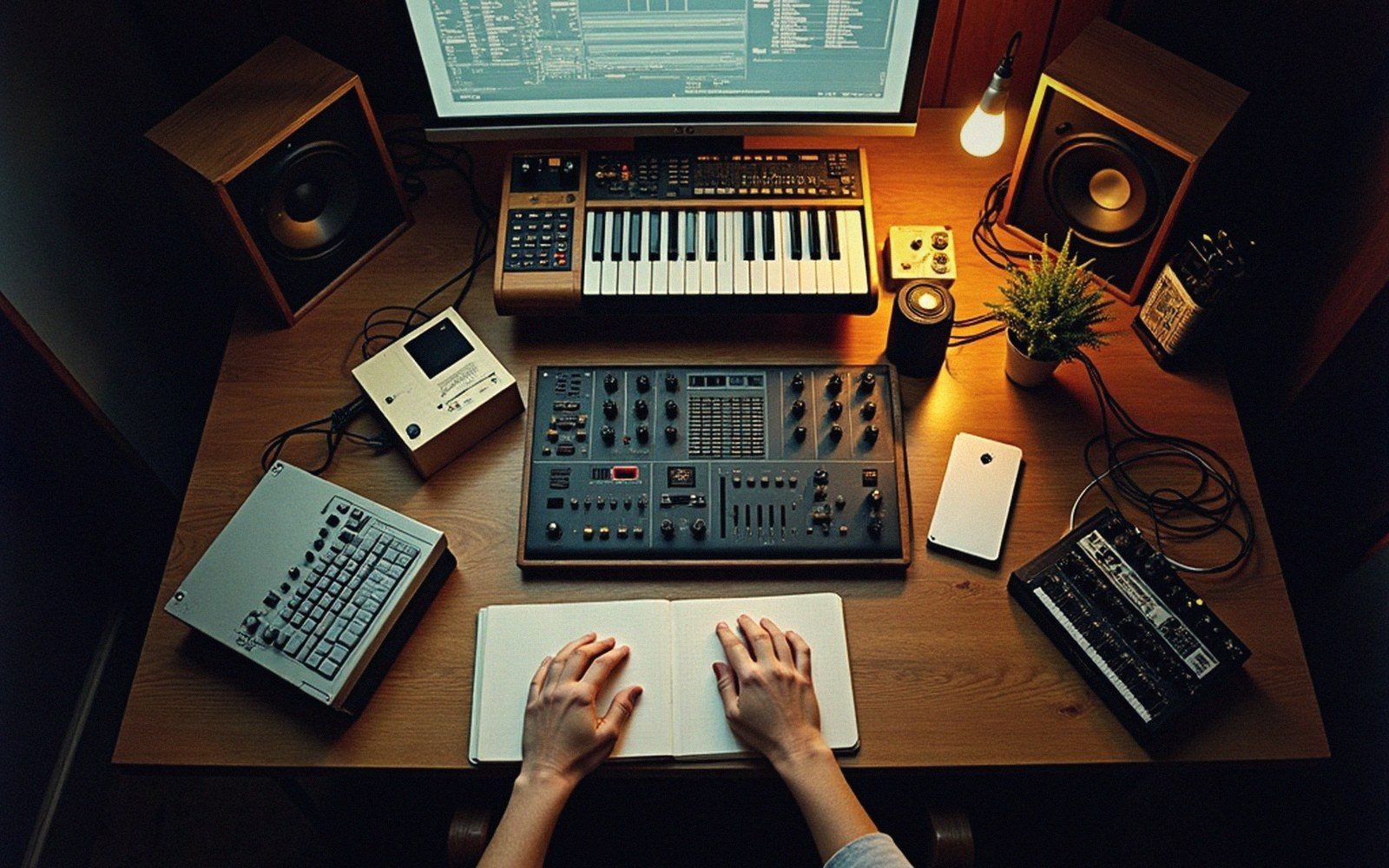
Conny Plank built his studio in a farmhouse outside Cologne in 1974, and the records made there sound like nowhere else. While British producers were chasing ambience — big rooms, gated tails, reverb that announced itself — Plank's instinct ran the other way: drier, harder, more mechanical. The space itself was modest, built into agricultural outbuildings near Wolperath, and that modesty was part of the aesthetic.
The client list reads like a map of the new electronic music. Kraftwerk recorded early work there. Devo, Ultravox, Eurythmics, Girlschool and Motörhead all passed through. What they found was a producer who treated the studio as a compositional tool rather than a neutral capture device, and who had no interest in making electronics sound organic. If a sequencer ran, it ran precisely. If a synthesiser had a hard edge, that edge stayed.
Plank's approach to synthesis leaned on the machines available in continental Europe at the time — Roland and Korg instruments, modular systems, whatever could be routed and repatched. The results rarely drew attention to polish.
Tracks built from sequencer patterns sat without the softening reverb that characterised so much British production of the same period; the mechanics were left exposed. The effect was a kind of austerity that suited the themes of Düsseldorf and the wider Krautrock lineage — a term Plank would have had complicated feelings about, but one that persists.
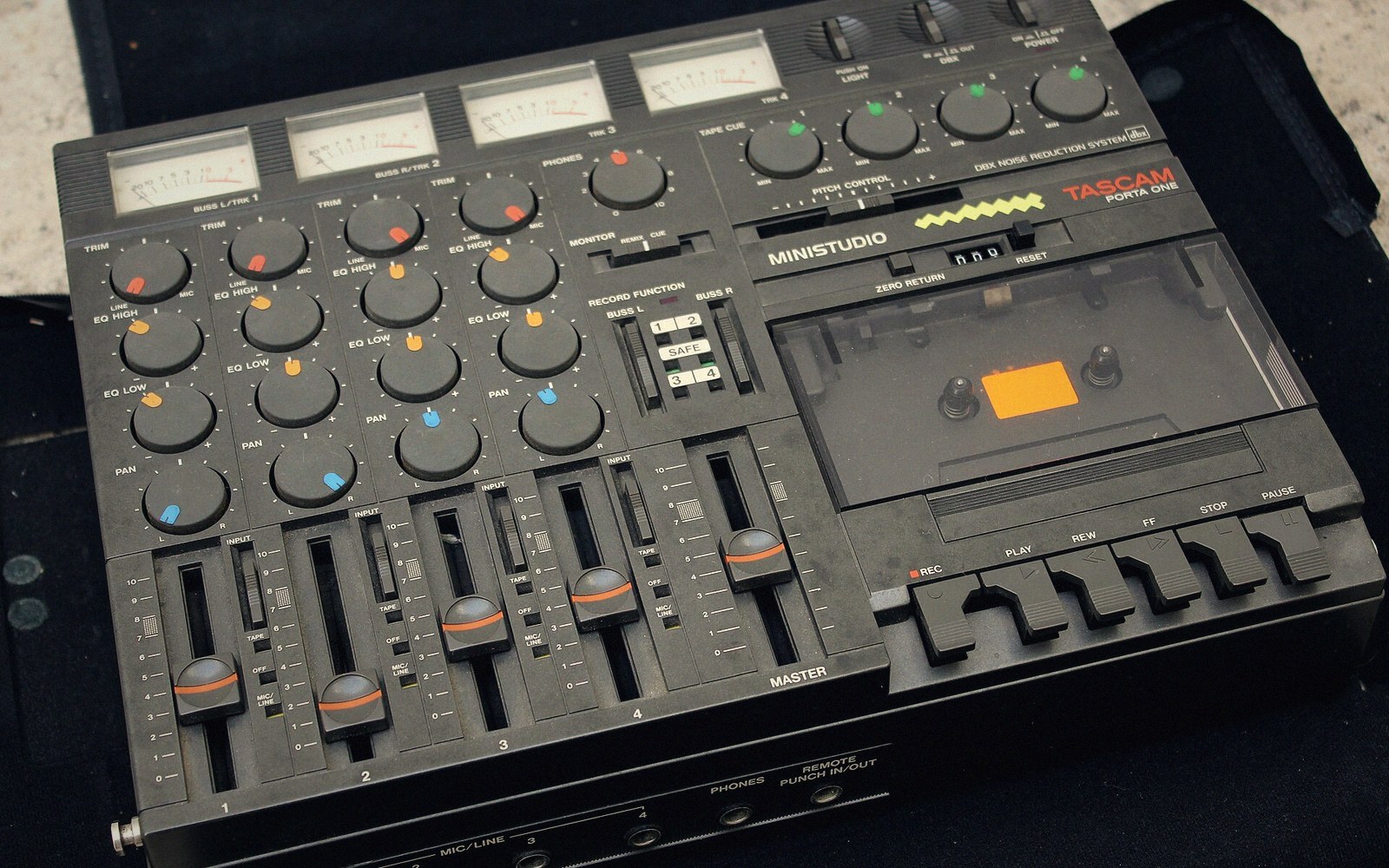
Photo: TASCAM Ministudio PortaOne - 4 track cassette tape recorder (c.1986) · Wikimedia Commons
The studio also served as a reminder that the same technology produced genuinely different results depending on the room's philosophy. A Linn LM-1 or a Roland drum machine processed through Townhouse Studio 2's stone room and its reverse-talkback compression is an entirely different object from the same machine recorded flat in Plank's farmhouse and left to sit in a dry mix. Neither is wrong; they are products of different convictions about what a record should declare about itself.
Plank died in 1987, and the studio continued under the care of his family. It operates today as a working facility and archive. The physical space — low ceilings, the surrounding fields, the particular quality of silence between the machines — shaped the records as surely as any piece of outboard gear. That is the argument the studio makes: that geography and attitude are a production choice, as real as any parameter on a synthesiser panel.
Continue in The Rooms
Same section, next entry
Related elsewhere in the magazine
Named in this entry
Every name above is real and appears here for documented work only. Where an origin story is contested this magazine says so rather than choosing the tidy version.