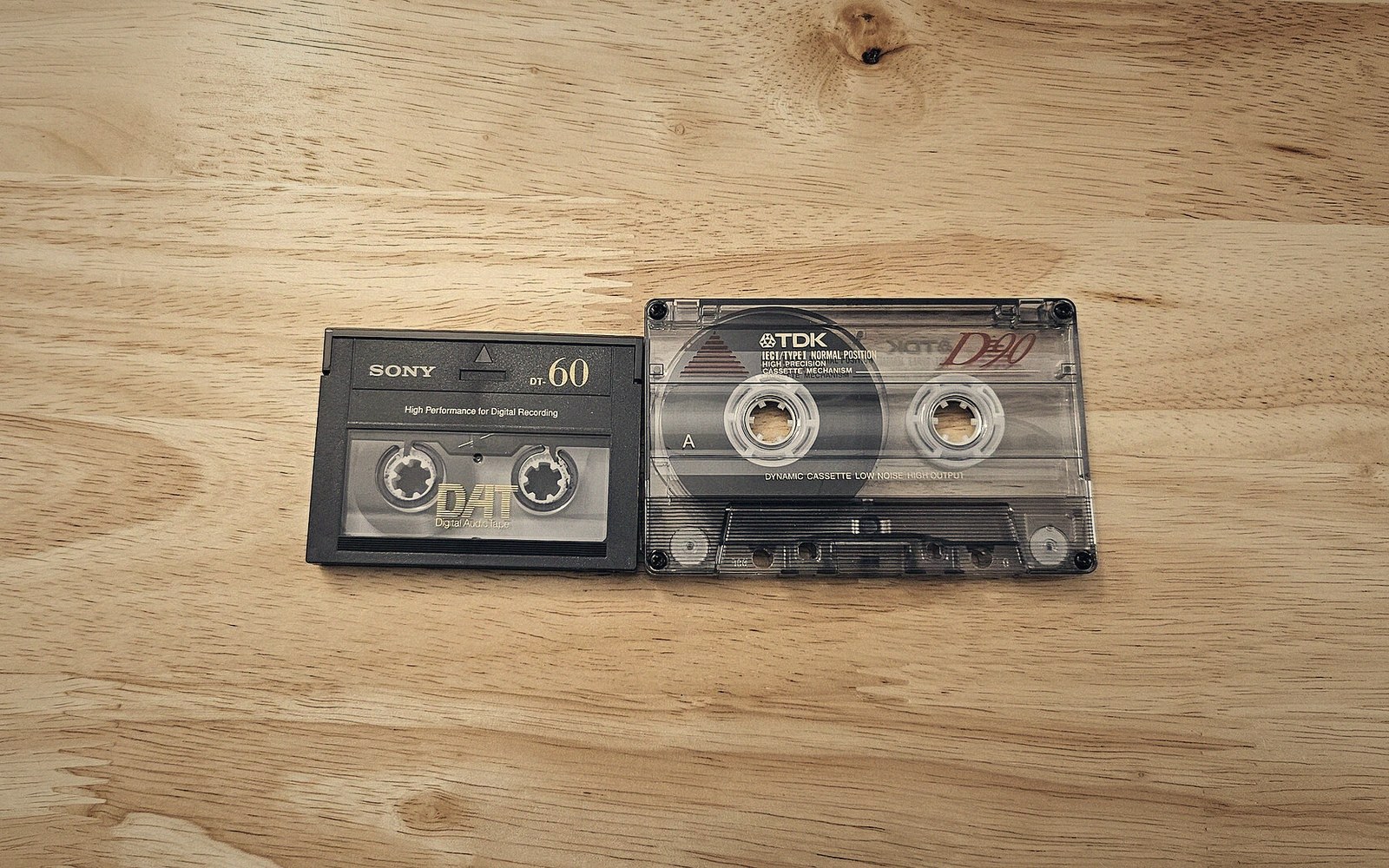
Portable, recordable and degraded — and the first format ordinary listeners could cut themselves into the music.
Philips introduced the compact cassette in 1963 as a dictation medium. By the mid-seventies it had become the dominant home-recording format, and by 1983 global cassette sales were outpacing vinyl. None of that was in the original brief.
The format runs eighth-inch-wide tape (3.81 mm) at 1⅞ inches per second — roughly a quarter of the speed used on professional open-reel recorders. That slow speed on narrow tape meant audible hiss, rolled-off high frequencies and a noise floor that the signal fought against throughout. Dolby B noise reduction, licensed from Dolby Laboratories and common on consumer decks from the early seventies, pushed the worst of it back, but the cassette was never a high-fidelity medium and it never pretended to be for long.
What it offered instead was mobility, economy and access. A C-60 cassette cost almost nothing. A Sony Walkman, released in 1979, meant the music went wherever the listener went. And crucially, a blank cassette meant anyone could record — radio off-air, records onto tape, or a rehearsal in a bedroom. The format democratised capture in a way that neither vinyl nor open-reel tape had managed for a mass audience.
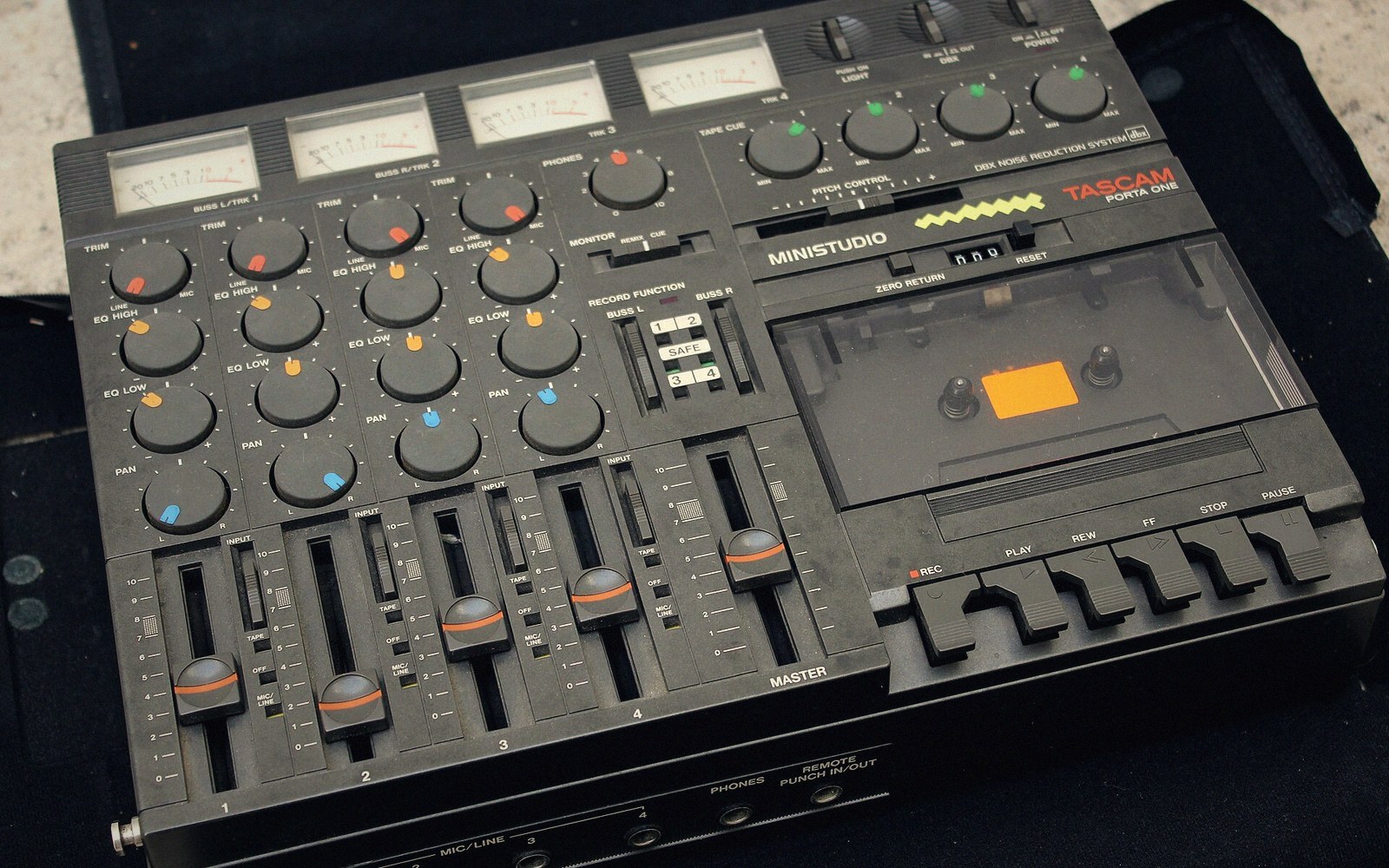
Photo: TASCAM Ministudio PortaOne - 4 track cassette tape recorder (c.1986) · Wikimedia Commons
For the new wave studio, the cassette played a specific supporting role. Producers routinely sent cassette references home from the session — the multitrack stayed in the machine, the cassette went in a coat pocket. It was also how rough mixes moved between studios before the DAT era. The degradation was known, expected and largely discounted; everyone understood that a cassette reference was not the record, it was an approximation.
Tape type mattered within those constraints. Type I (ferric oxide) was the baseline. Type II (chrome or chrome-equivalent) handled higher frequencies better and suited music. Type IV (metal) arrived in the late seventies, offering higher coercivity and a better high-frequency ceiling than the other types — but the decks that could exploit it cost accordingly. TDK, BASF and Maxell each had reputations attached to particular stock, and engineers had preferences.
The cassette also quietly altered how listeners interacted with albums. A vinyl side imposed sequence; a C-60 or C-90 invited compilation. The mixtape — personally sequenced, often labelled by hand — was a cultural form the format made possible, and one that carried its own editorial logic. No professional studio produced a mixtape, but the impulse behind it — arrangement as a statement of taste — rhymes closely with what producers were doing at the desk.