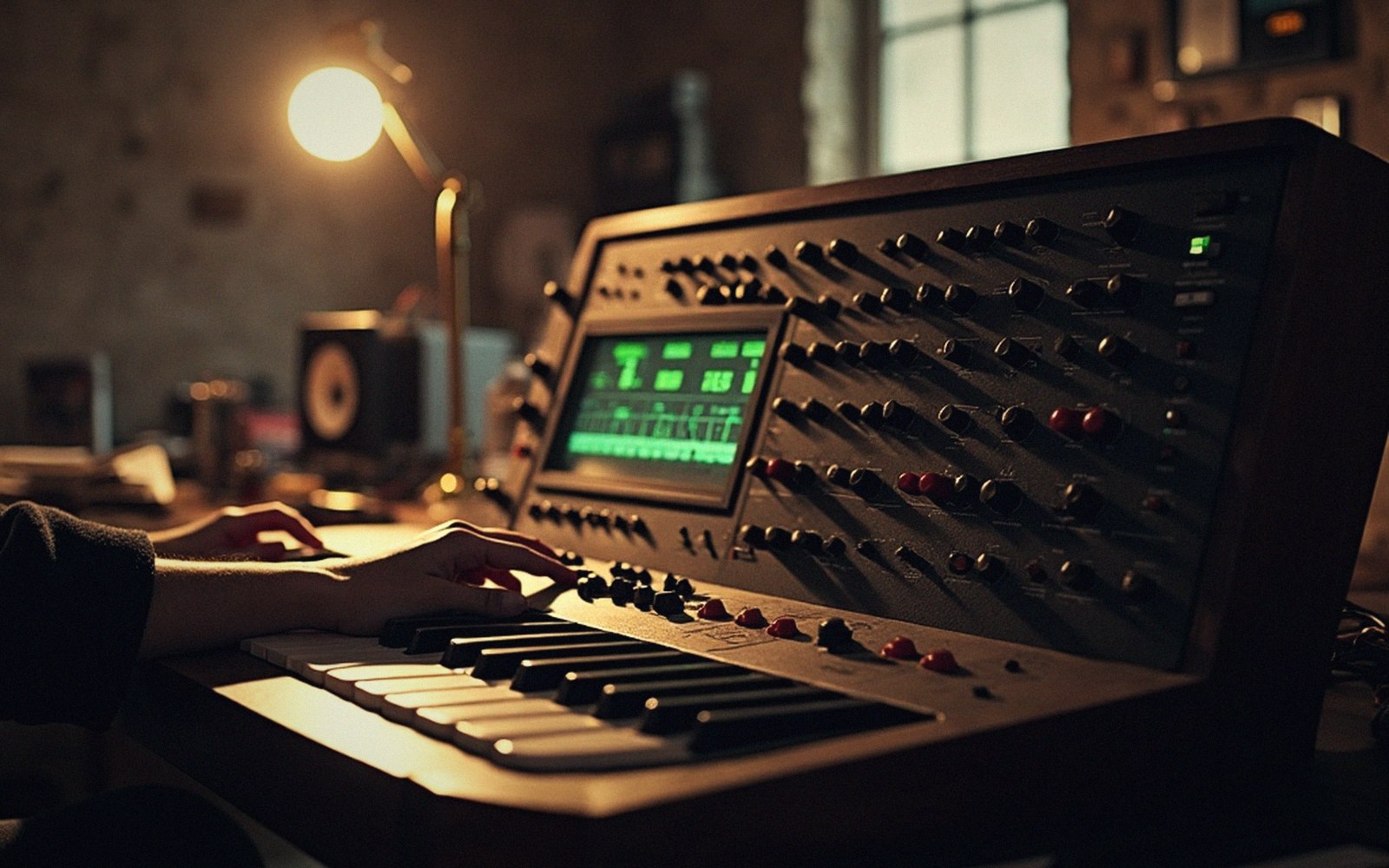
The live room that made the decade's signature drum sound — not by design, but because of what happened when Phil Collins sat down to play.
Townhouse Studios opened on Goldhawk Road in Shepherd's Bush, west London, in 1978, built and owned by Virgin Records as a commercial residential facility. Studio 2 was conceived as a live room with genuine acoustic mass: the walls were lined with stone, the ceiling was high, and the space was allowed to be loud. It was not designed to sound dry. It was designed to sound big.
That bigness was structural. Stone is reflective and non-absorbent; it returns energy to the room rather than swallowing it. The parallel hard surfaces built up a long, natural reverb tail — unruly by the standards of a studio that needed to capture detailed arrangements, but physically impressive in a way that treated rooms rarely are. Engineers working in Studio 2 in its early years had to manage the room rather than simply use it.
The Accident
The session that changed how that room — and eventually how drums in general — would sound was a recording date in 1980 or early 1981, during work on a Peter Gabriel album. Hugh Padgham was engineering. Phil Collins was playing drums. The specific mechanism was a piece of routing that exploited a feature of the SSL 4000 console installed at Townhouse: the reverse talkback circuit.
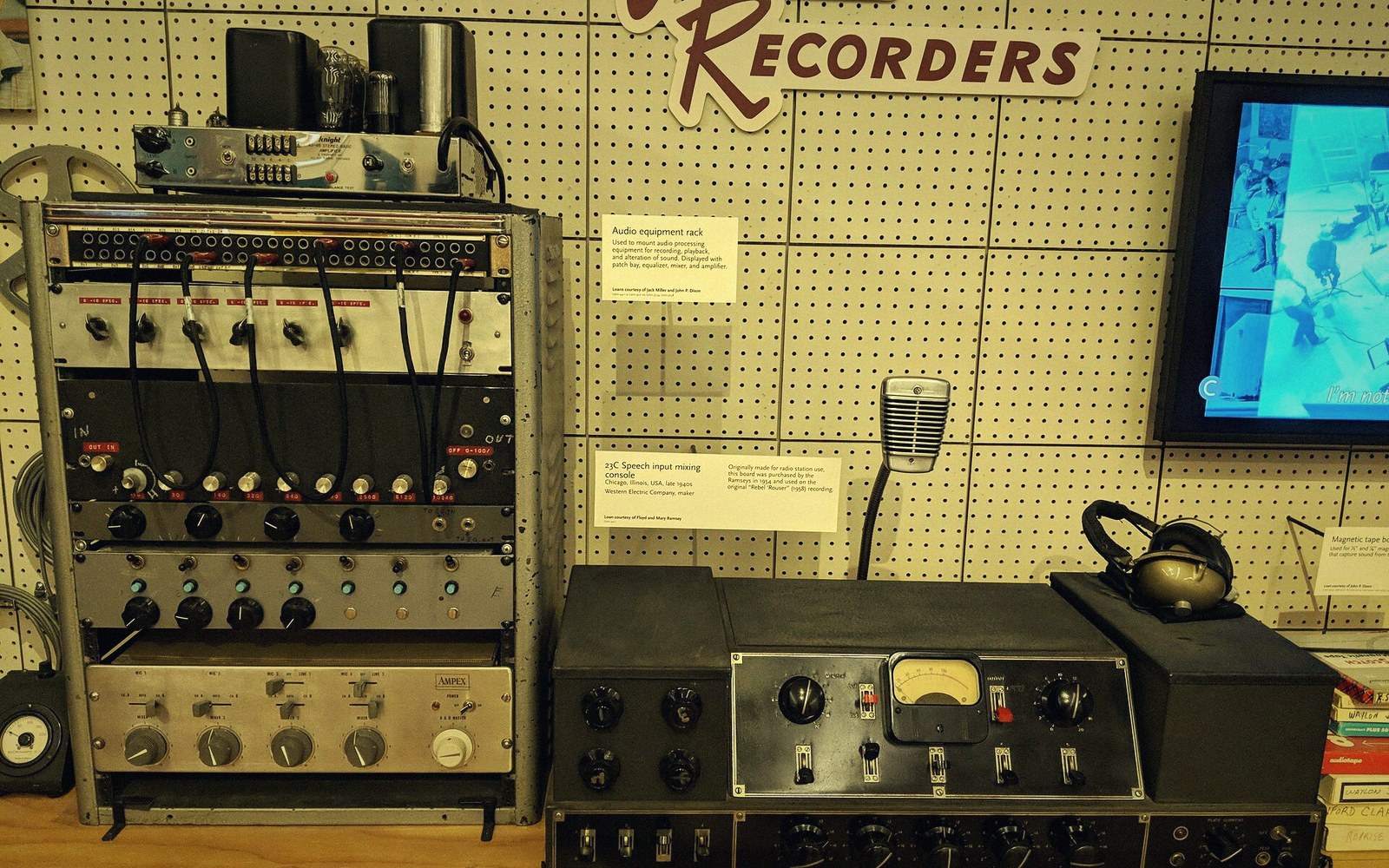
Photo: Western Electric 23C Speech input mixing console (1940s) purchased by Floyd Ramsey at Audio Recorders (studio) in 1954, & unknown recording studio rack - MIM Phoenix AZ (2017-12-04 14.04.59 by bobintraveling 140459) · Wikimedia Commons
Talkback is normally one-directional — the control room speaks to the studio. Reverse talkback routes the studio microphone signal back through the desk, but the SSL's implementation passed that signal through a noise gate and a limiter/compressor hard-wired into the channel path.
When Padgham routed the room microphones through this circuit and Collins played, what came back was the room's natural reverb — enormous, stone-amplified — cut dead at the tail by the gate. The compressor had pushed the attack up into the room ambience; the gate removed the decay before it could wash into the next beat.
The result was the sound now universally called gated reverb: a drum hit that blooms with an almost synthetic power and then stops, sharply, in a way no natural room ever does. It is an artefact of signal routing, not of acoustic design. The stone room provided the raw material — the long, live reflection — and the SSL's talkback circuit, used in reverse and under compression, shaped it into something controllable and, as it turned out, irresistible.
The session that changed how that room — and eventually how drums in general — would sound was a recording date in 1980 or early 1981, during work on a Peter Gabriel album.
What Followed
Collins used the sound on his own material and it appeared on In the Air Tonight (1981), the track that fixed the effect in public consciousness. Padgham would go on to deploy variants of the technique across a string of commercially dominant records through the decade.
The SSL 4000, by then installed in an increasing number of major facilities, had a topology that allowed the same routing elsewhere — but Townhouse Studio 2 remained the room where the combination of console and live acoustic had first cohered into something engineers could deliberately reproduce.
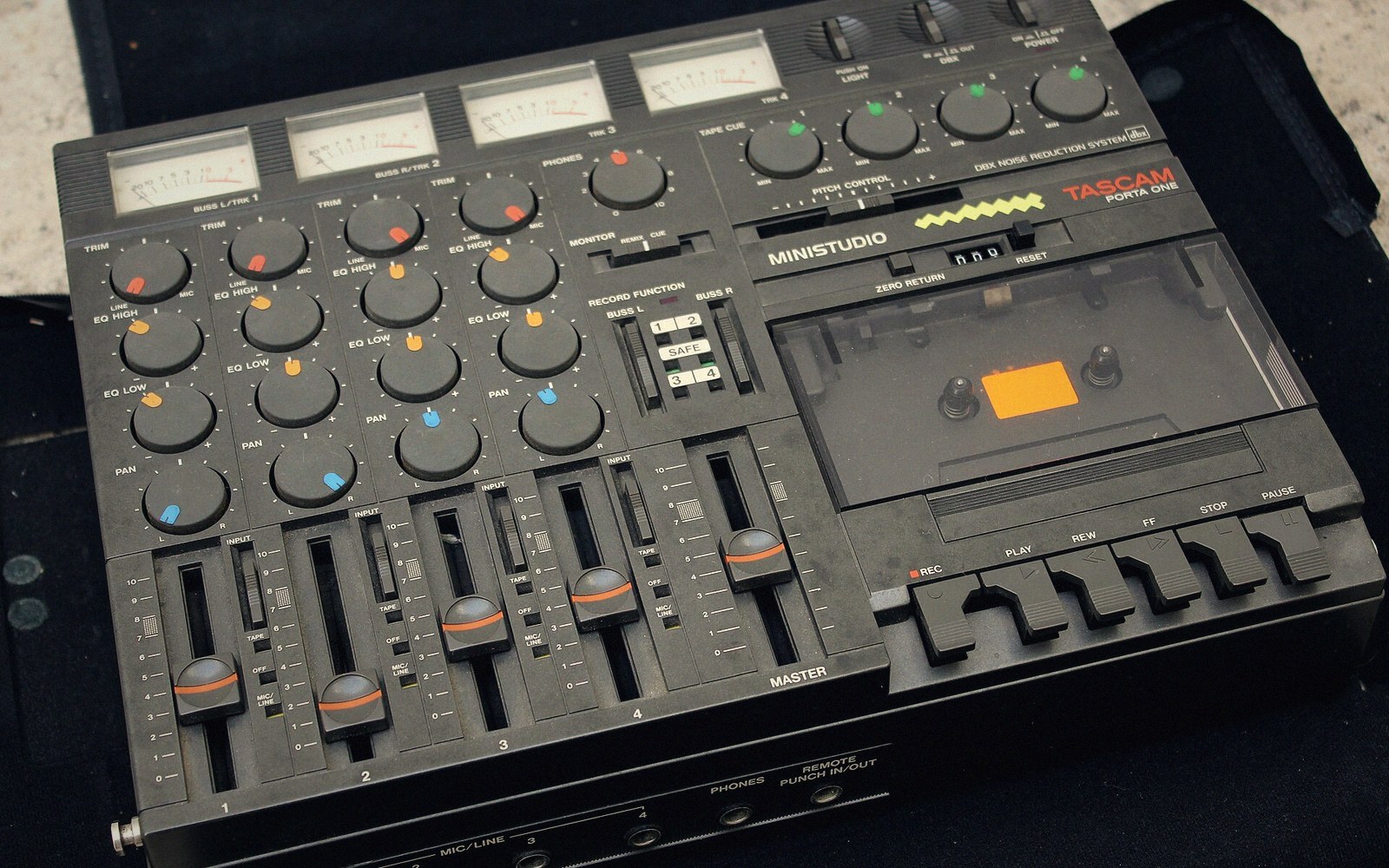
Photo: TASCAM Ministudio PortaOne - 4 track cassette tape recorder (c.1986) · Wikimedia Commons
The stone room itself was not unique. Hard parallel surfaces exist in plenty of live rooms. What the Townhouse space contributed was a reverb tail of the right character and length to survive compression and gating without collapsing — dense enough to bloom, short enough not to overwhelm the gate's recovery time. Rooms with too much absorption gave the gate nothing to work with; rooms with too much flutter added pitch to the tail. Studio 2 sat, by design or luck, in a useful middle ground.
The sound it produced became so copied — through digital reverb units, sampled room impulses, and deliberate imitation — that its origin in a specific physical room on Goldhawk Road is easy to forget. It started with stone.
Continue in The Rooms
Same section, next entry
Related elsewhere in the magazine
Named in this entry
Every name above is real and appears here for documented work only. Where an origin story is contested this magazine says so rather than choosing the tidy version.