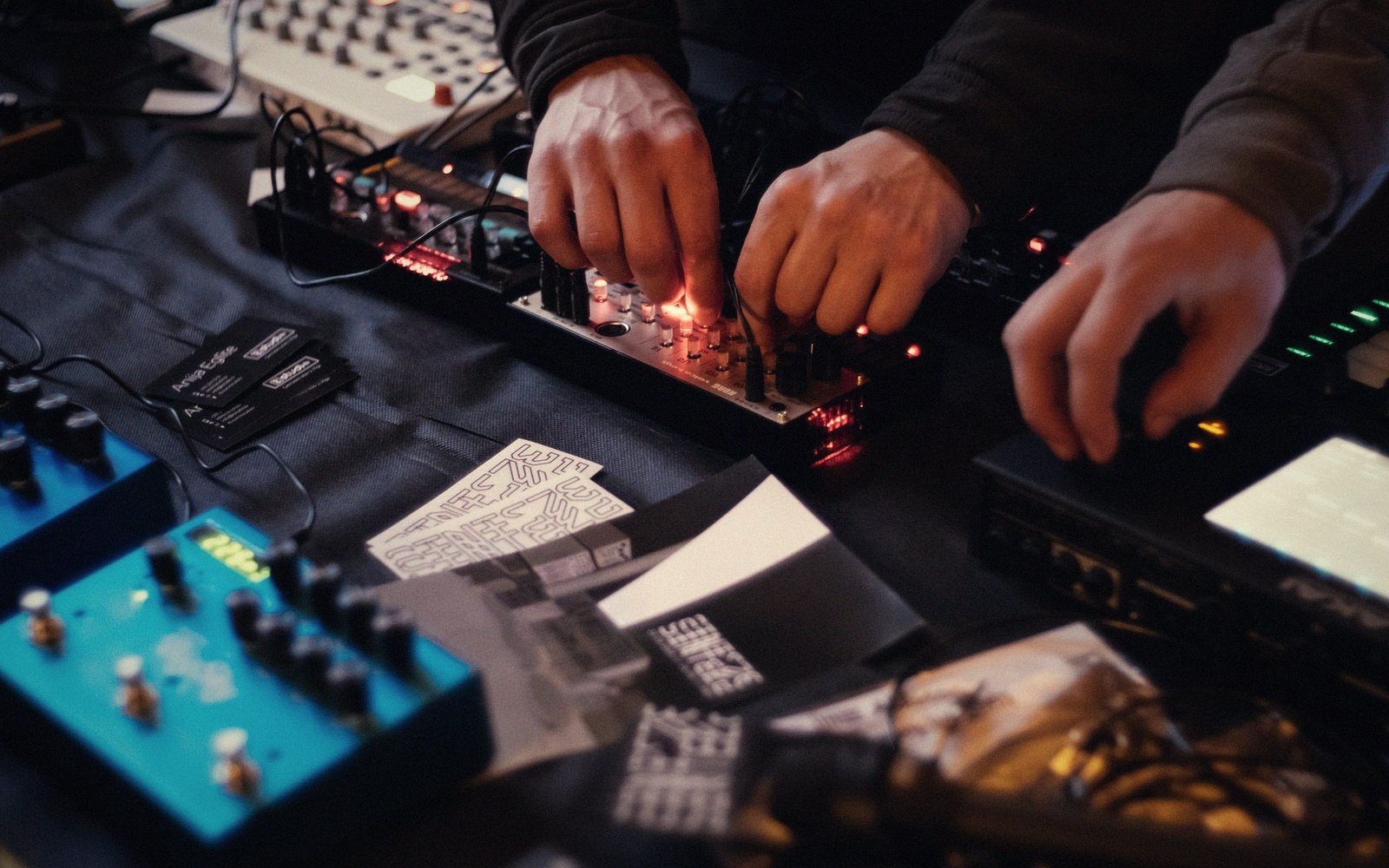
Before a polysynth could follow a drum machine, someone had to solve a timing problem that had nothing to do with music.
A multitrack session in the early eighties rarely had just one machine running. There was a drum machine — a Linn LM-1 or a Roland TR-808 — and there were sequencers driving polysynths, and there was the tape deck itself. Getting all of them to start together, stay together, and recover from a dropout without collapsing into chaos was the practical problem that determined whether the whole approach was even viable.
The common solution was a sync tone: a steady click, derived from the sequencer's internal clock, printed to one track of the tape — usually the outermost track, as far from the audio as the format allowed. On playback, that tone was read back and used to drive the sequencer again, locking its tempo to whatever speed the tape happened to be running at.
Drift in the transport became drift in the sequencer too, which meant the two stayed together. The underlying standard most studios used was MIDI's predecessor in this role: a simple frequency-based pulse called FSK — Frequency Shift Keying — or, for tighter work, SMPTE timecode, borrowed from broadcast and film.
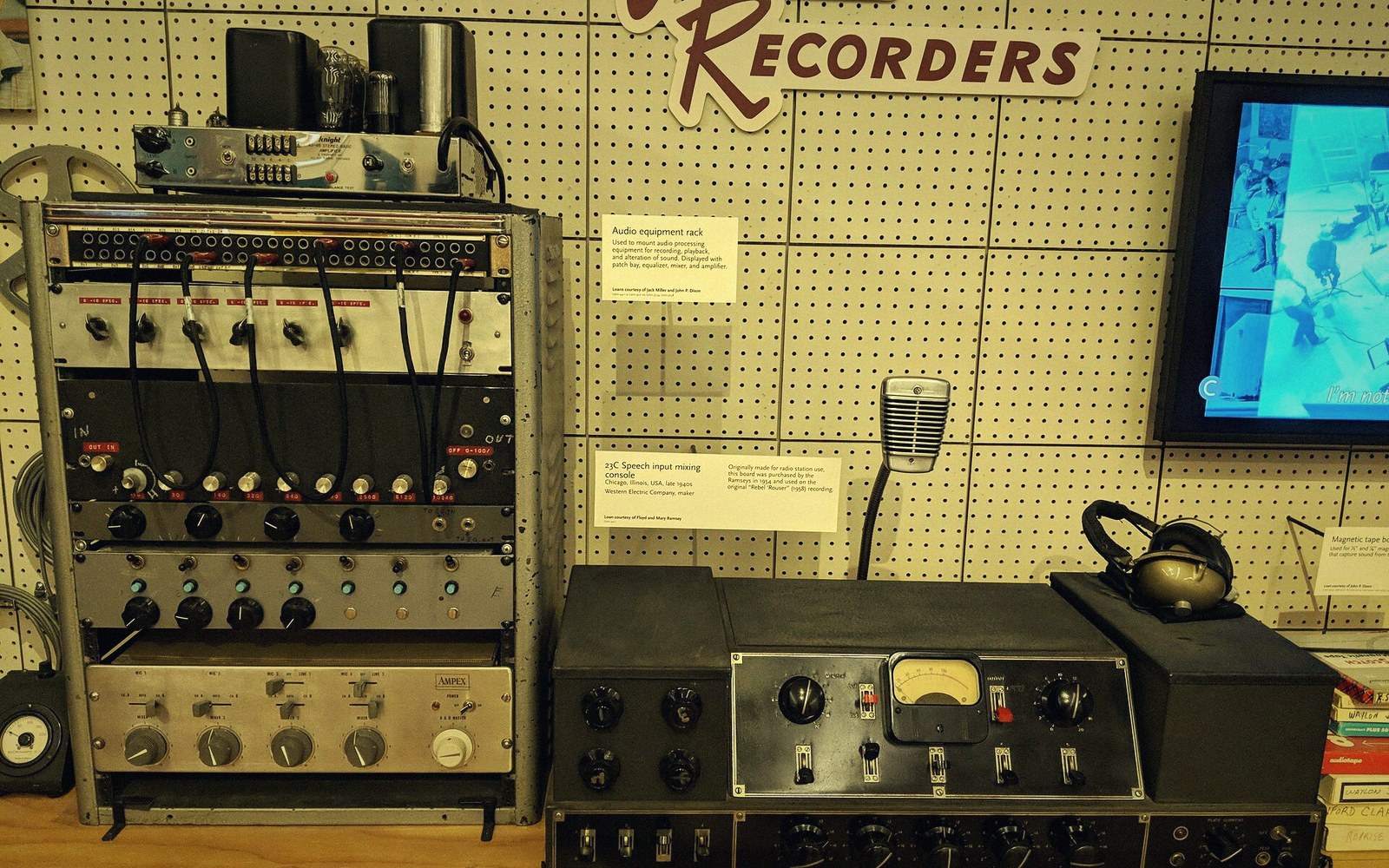
Photo: Western Electric 23C Speech input mixing console (1940s) purchased by Floyd Ramsey at Audio Recorders (studio) in 1954, & unknown recording studio rack - MIM Phoenix AZ (2017-12-04 14.04.59 by bobintraveling 140459) · Wikimedia Commons
FSK was cheap and worked; SMPTE was more robust and allowed the tape to be shuttled to any point and picked up from there. Martin Rushent, assembling Dare with the Human League at Genetic Studios in Streatley, leaned on sequencer-to-tape lock extensively — the record's metronomic precision depends on it. Trevor Horn's productions at SARM and later at his own facility ran the same principle at higher complexity, synchronising multiple sequencers and samplers to a single tape reference.
The limitation was always the tape track it occupied. On a 24-track session, giving one track to a sync tone was an acceptable cost. On a 16-track or a portastudio, it was a real sacrifice. Engineers learned to record it at a conservative level — loud enough to read reliably, quiet enough not to bleed into the adjacent track and put a stuttering artefact somewhere in the bass.
Continue in Tape
Same section, next entry
Related elsewhere in the magazine
Named in this entry
Every name above is real and appears here for documented work only. Where an origin story is contested this magazine says so rather than choosing the tidy version.