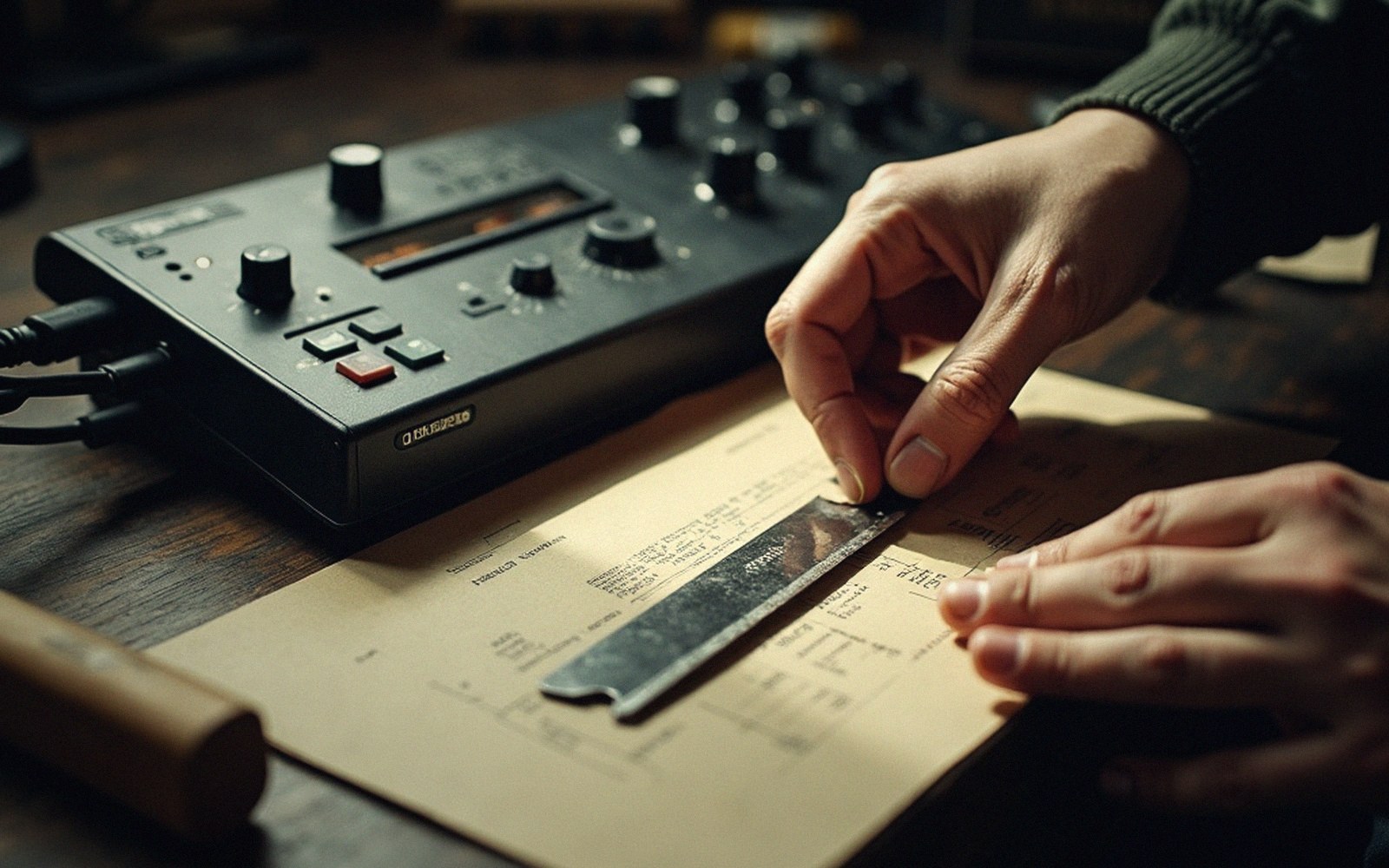
Before non-linear editing existed, a wrong note stayed on the tape or you cut it out with a blade. Splicing — the physical joining of two pieces of magnetic tape — was the fundamental editing act of the analogue studio, and it left no undo function, no version history, no safety net beyond a bin full of offcuts kept in the right order.
The tools were minimal: a splicing block, a single-edge razor blade, a grease pencil, and leader tape. The block was a short aluminium channel, precisely milled to accept quarter-inch or half-inch tape, with guide slots cut at 90 degrees and 45 degrees across its width. A straight cut produced a hard, click-like edit; a diagonal cut made a softer, slightly crossfaded join that sat more naturally in music. Engineers learned quickly which angle the material demanded.
The grease pencil — a soft wax marker that wiped cleanly off oxide — marked the edit point while the tape ran. An engineer would rock the reels back and forth by hand, a technique called scrubbing, listening to the playback head reproduce the audio in slow, pitch-shifted fragments until the precise syllable, transient or beat appeared under the mark.
That mark then went to the block, the blade came down, and the tape became two pieces. A strip of splicing tape — base (shiny) side up, adhesive side down — joined them. Done in seconds, irreversible in the same instant.
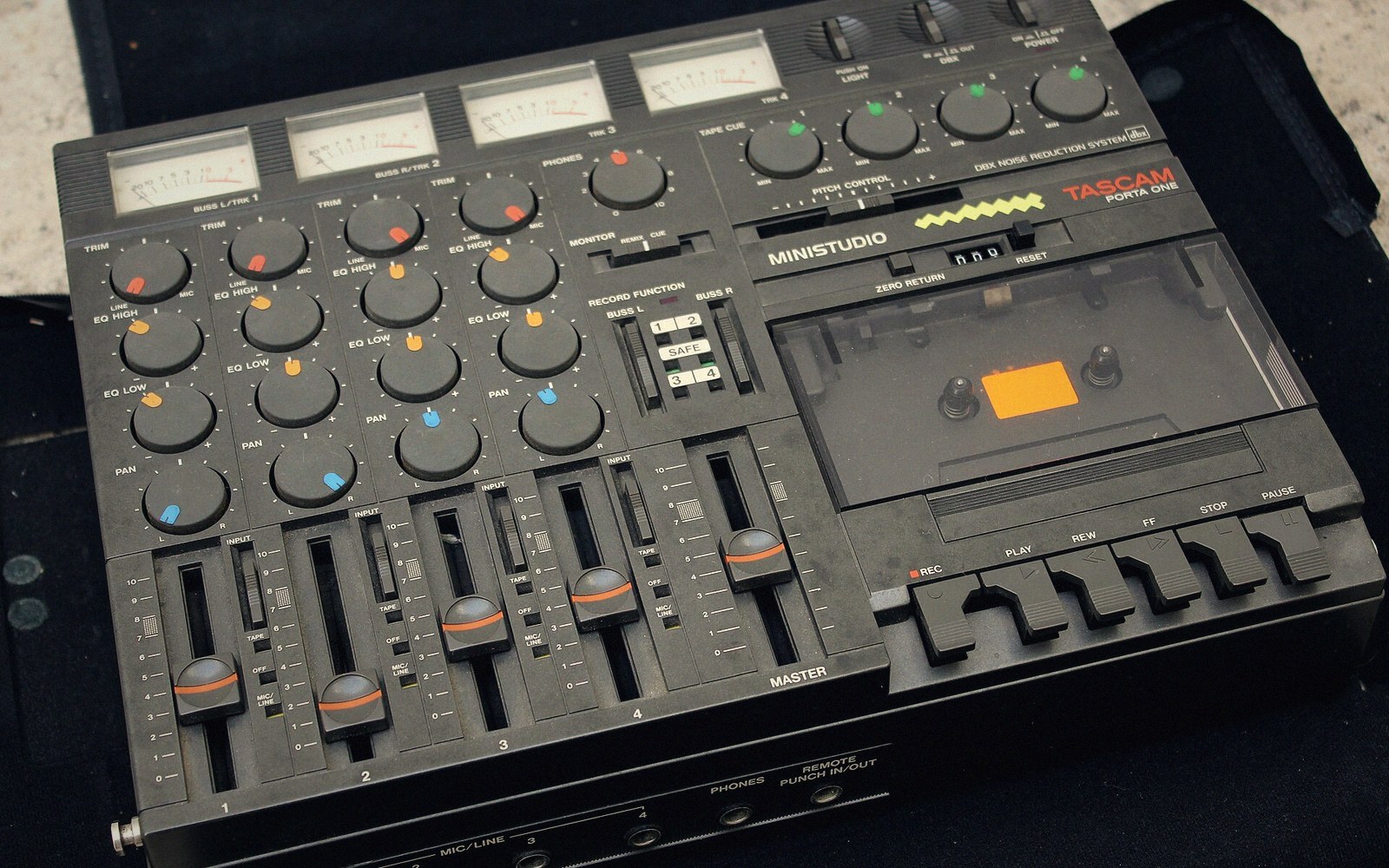
Photo: TASCAM Ministudio PortaOne - 4 track cassette tape recorder (c.1986) · Wikimedia Commons
The whole procedure sounds crude against what came after, but it was genuinely precise. Classical recording had raised the craft to a high art: producers at Deutsche Grammophon and Decca routinely assembled performances from dozens of takes, with cuts placed on string attacks or the leading edge of a piano note where the transient masked the join.
A well-placed splice was inaudible. A clumsy one — a fraction of a millimetre off, or with the adhesive creeping onto the oxide — produced a click that would be pressed into every copy of the record.
In pop and rock multitrack sessions, the calculus changed. Where a classical engineer spliced a two-track stereo master, a multitrack editor had to cut through every track simultaneously.
On a two-inch 24-track machine the tape was wide enough that a misaligned diagonal cut could produce a slightly different edit time on the top tracks versus the bottom, audible as a smear rather than a clean join. Experienced tape ops learned to hold the blade absolutely perpendicular, to use a fresh edge for every cut, and to check the splice by playing it back before the reel moved anywhere near a record head.
The stakes were physical in a way that later generations of engineers rarely encounter. If you dropped an offcut or got the bin segments out of sequence, a performance was gone. Studios developed their own protocols: some engineers labelled offcuts with a chinagraph pencil on the back of the leader; others used a clothespeg system on a dedicated stand beside the console.
The block was a short aluminium channel, precisely milled to accept quarter-inch or half-inch tape, with guide slots cut at 90 degrees and 45 degrees across its width.
The discipline was partly temperamental — some of the most celebrated editors in British studios were known for a kind of deliberate calm under pressure that had nothing to do with musicianship and everything to do with not losing the take.
By the early 1980s, the tape splice was already being flanked. The Linn LM-1 removed the need to edit drum performances at all; MIDI sequencing meant that arrangement edits could be made in the box before anything was committed to tape.
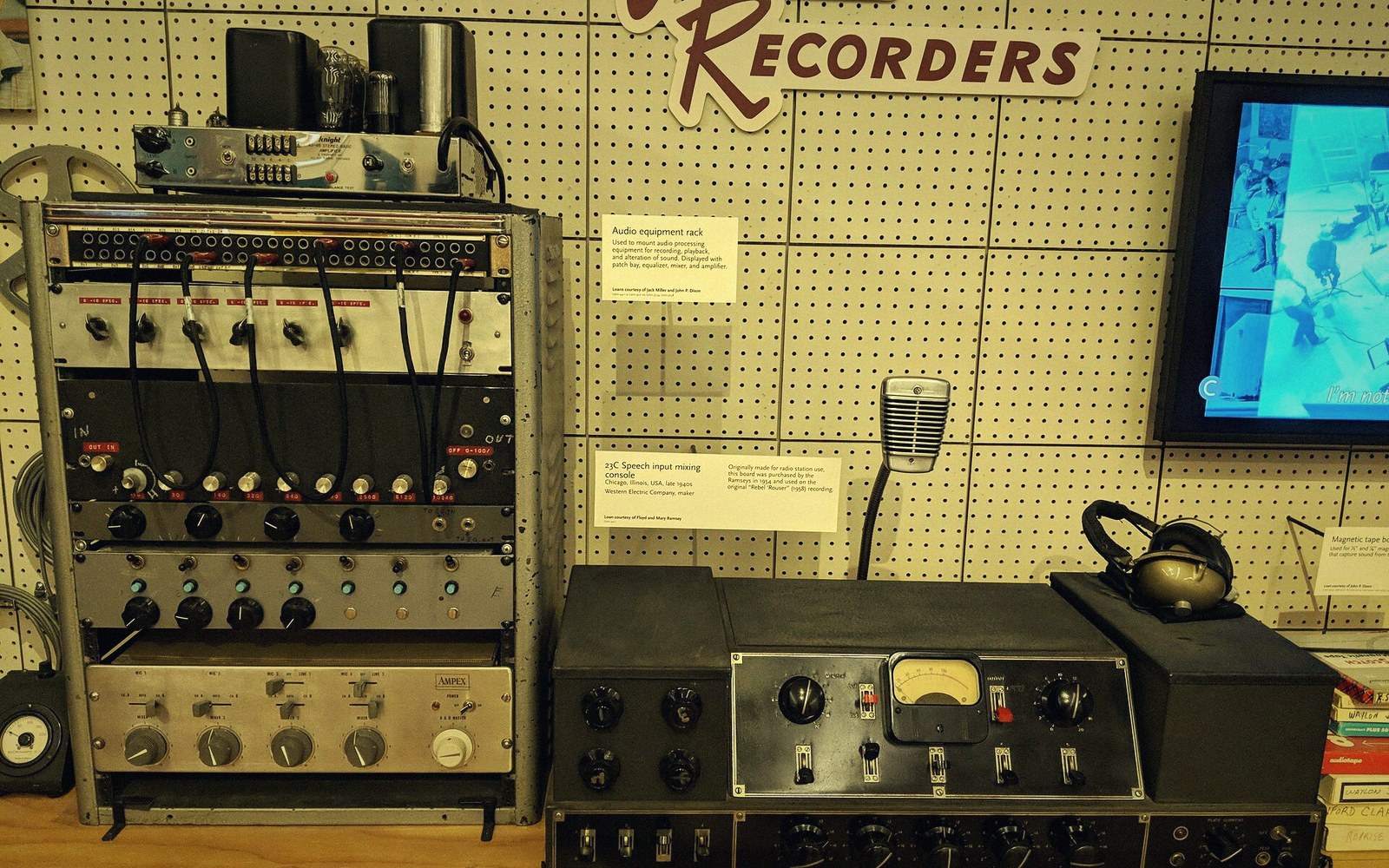
Photo: Western Electric 23C Speech input mixing console (1940s) purchased by Floyd Ramsey at Audio Recorders (studio) in 1954, & unknown recording studio rack - MIM Phoenix AZ (2017-12-04 14.04.59 by bobintraveling 140459) · Wikimedia Commons
What splicing did survive into the new-wave era tended to be structural — dropping a verse, tightening an intro, assembling a radio edit from a longer mix — rather than corrective note-by-note repair. The physical edit became a gross edit, reserved for moments where the material itself demanded it.
The grease pencil mark stayed. The bin of labelled offcuts stayed. The particular held-breath quality of bringing the blade down on a master reel — that never entirely went away, not until the master was no longer a reel at all.
Continue in Tape
Same section, next entry
Related elsewhere in the magazine
Named in this entry
Every name above is real and appears here for documented work only. Where an origin story is contested this magazine says so rather than choosing the tidy version.